Canadian Lighting Project and Lighting Fixture Earn 2018 AZ Awards
July 24, 2018

Two Canadian firms are among 20 winners of Azure magazine’s eighth annual international AZ Awards competition: Moment Factor, for its interactive illumination of the Jacques Cartier Bridge in Montreal, Quebec, and Castor Design, for its induction wall light that uses an expired fluorescent tube lamp. This year’s competition received 997 submissions from 46 countries. The winners were unveiled at a celebration at Toronto’s iconic Evergreen Brick Works. Winners and finalists flew in from as far away as Austria, Mexico and Japan.

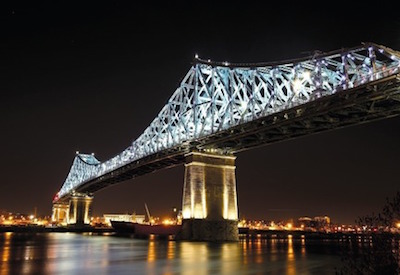
Moment Factory: 2018 AZ Award for “Best Lighting Installation”

An iconic structure in the Greater Montreal landscape, the Jacques-Cartier Bridge has been used by Canadians to cross the Saint Lawrence River for almost 90 years. The five-lane steel bridge serves as a gateway between the city of Montreal and its southern suburbs, and with 98,000 vehicles traversing it every day it is the third busiest bridge in Canada. The bridge spans over 3,350 m (11,000 ft) and is best known for the eight finials, or architectural ornaments, that sit atop its four main columns and resemble the Eiffel Tower.

The concept for the project was for the Jacques-Cartier Bridge to reflect the energy and pulse of the city in real time through the use of 2,800 intelligent LED lights attached to the steel truss structure. Philips supplied the interactive lighting for the “digital skin” of the bridge with 2,400 iColor Accent Powercore fixtures. Each evening, as the sun begins to set on Quebec’s metropolis, the lights awaken and bring the bridge to life with vibrant colours and animations. Throughout the night the lights on the exterior of the bridge respond to Montreal’s energy by creating patterns using colours, intensity and motion based on the frequency ‘Montreal’ is shared on social media. In effect, these patterns mirror the heartbeat of the city and make it the first People Connected Bridge.

“When working on the historic city of Montreal’s most visible architectural icon, our client and team of designers set demanding environmental, aesthetic and connectivity performance criteria,” says Gabriel Pontbriand, Moment Factory Senior Creative Director and Lighting Designer. “Philips Color Kinetics LED Lighting system was a top choice for us to illuminate the dynamic exterior digital ‘skin’ component of the bridge due to its weather and vibration resistance and long life span. Its excellent resolution and dimming attributes were key for the designer team to tell the living story of our city, our seasons and our people.”

Castor Design:  2018 AZ Award in the Lighting Fixtures category

Castor Design is a Toronto-based practice run by Brian Richer, a trained architectural stone carver with a degree in English literature and philosophy, and Kei Ng, a trained architect with a background in set design. According to Azure’s coverage of the award winners, Richer and Ng are interested in the middle ground between art and design, bringing a sense of irreverence to each project. Materials and their reuse make up an important part of Castor’s aesthetic; burnt out bulbs to make lighting, a rusty shipping container to make a sauna.

As described by Azure, Castor Design has developed an elegant way to revive — and actually improve — expired fluorescent lights aith its induction wall light. The induction wall light has two components:

  • a foot-activated steel switch box that resembles a guitar pedal
  • an electrical circuit and a copper coil that encircles an iron rod


When the switch is tapped, a high-voltage electrical current activates the circuit, which transfers power to the copper coil. This coil is connected by a wire to the lamp’s second major component — a holder, or wall-mounted fixture that cradles the used bulb — enveloping it in an electromagnetic field. In this way, the T12 bulb emits a glow far more pleasing than the glare of the original fluorescent.

The underlying scientific principle — electromagnetic induction — is almost two centuries old, having been discovered by the legendary British physicist Michael Faraday in 1831. While the technology is straightforward, Castor’s application of it is conceptually superb. The lamp holder exposes the blackened ends of the bulb, accentuating the life-after-death symbolism and gently reminding us of our culture of single-use consumption. When an appliance conks out, you send it to landfill. But, as this recycled beauty suggests, a creative mind can not only revive a spent object but improve upon it, too.

Find out more about all Azure 2018 award winners: https://awards.azuremagazine.com/cms/2018-az-awards-finalists-winners/.
Related Articles

  • | | |

    EB Horsman: Looking for the Perfect Task Lighting for Your Space?

    Ever struggled to see clearly while prepping in the kitchen, working at your desk, or tackling a project? The right task lighting can make all the difference. At EB Horsman, they offer a range of Liteline solutions designed to provide focused, energy-efficient illumination wherever precision matters. Task lighting delivers focused illumination to areas where clarity and detail are essential. Unlike ambient lighting, which brightens an entire space, or accent lighting, which highlights décor, task lighting is designed for specific activities—from cooking and cleaning to reading, crafting, or working at a bench. Proper task lighting enhances productivity, reduces eye strain, and improves overall comfort. Choosing the right fixtures, positioning them effectively, and integrating them with ambient and accent layers ensures your space is both functional and inviting.

  • |

    Modern High Ceiling Lighting Ideas 

    High ceilings, distinctive in contemporary architecture, create a sense of spaciousness and timeless ambiance. However, lighting these elevated spaces presents unique challenges. Whether you need a cozy light for your bedroom or a practical solution for your kitchen, Ledvance can provide inspiration and guidance to effectively illuminate your high-ceilinged space.​ High ceilings pose intricate lighting challenges, from achieving uniform light dispersion to balancing practicality and warmth. Addressing these challenges requires careful design considerations. Traditional configurations struggle to achieve uniform light dispersion, complicated by issues like light path and scattering. This complexity underscores the importance of creating a comfortable lighting environment in high-ceiling spaces. Diverse spaces further intensify the challenge due to varying lighting needs. In high-ceiling environments, designers must carefully allocate light to accommodate specific activities, balancing practicality and the creation of a warm atmosphere. Despite the range of available high-ceiling lighting products, limitations persist, including affordability and the ability to meet nuanced lighting requirements. Achieving a harmonious balance between functionality, aesthetics, and cost remains a crucial consideration for designers and customers alike.

  • |

    Beyond Illumination: Why Canadian Architects Now Design with Shadow

    Canadian architecture is entering a new era where lighting is no longer defined by brightness alone. For decades, buildings were designed to eliminate shadows, replacing contrast with even illumination. That era is over. Today, architects are intentionally embracing shadow, designing spaces that feel more human, expressive, and immersive. This movement often referred to as beyond illumination lighting is shaping projects across offices, cultural venues, and urban developments in Canada. Shadows have shifted from being an unwanted byproduct of light to an essential architectural language. A well-placed shadow can soften a wall, dramatize a structure, or guide a visitor’s movement through space. In workplaces, shadows create subtle zoning, supporting focus and collaboration without physical barriers. In galleries and public spaces, they heighten drama, drawing people deeper into the experience. By using shadow deliberately, Canadian architects are no longer designing only for visibility. They are designing for atmosphere, memory, and identity qualities that resonate far beyond the walls of a building.

  • | |

    The Difference Between Accent, Ambient & Task Lighting: Ultimate Guide

    In interior design, lighting is not just about brightening the room. Sensitive lighting layout is the key in the whole aesthetic atmosphere. An outstanding lighting solution will not rely on one type of fixture. Rather, it is through the combination of different types of lighting. Accent, ambient, and task lighting are three basic types of lighting, and each serves the respective effect. This article will discuss the differences between accent, ambient and task lighting. It clarifies the unique functions of each type and explains how they work together to create an effective lighting environment.


Changing Scene


Design

  • Zaneen: Answering Your LED Questions

    Zaneen: Answering Your LED Questions

    The Zaneen team wanted to take a moment to tell you more about Light Emitting Diodes (LEDs) by answering some common questions. They begin by defining what a LED means and describe a few of its technical details and then look into the importance of LED technology, the advantages of using LEDs, and some must-know… Read More…

  • Lumenpulse: A Look at the Past & Future of LED Binning

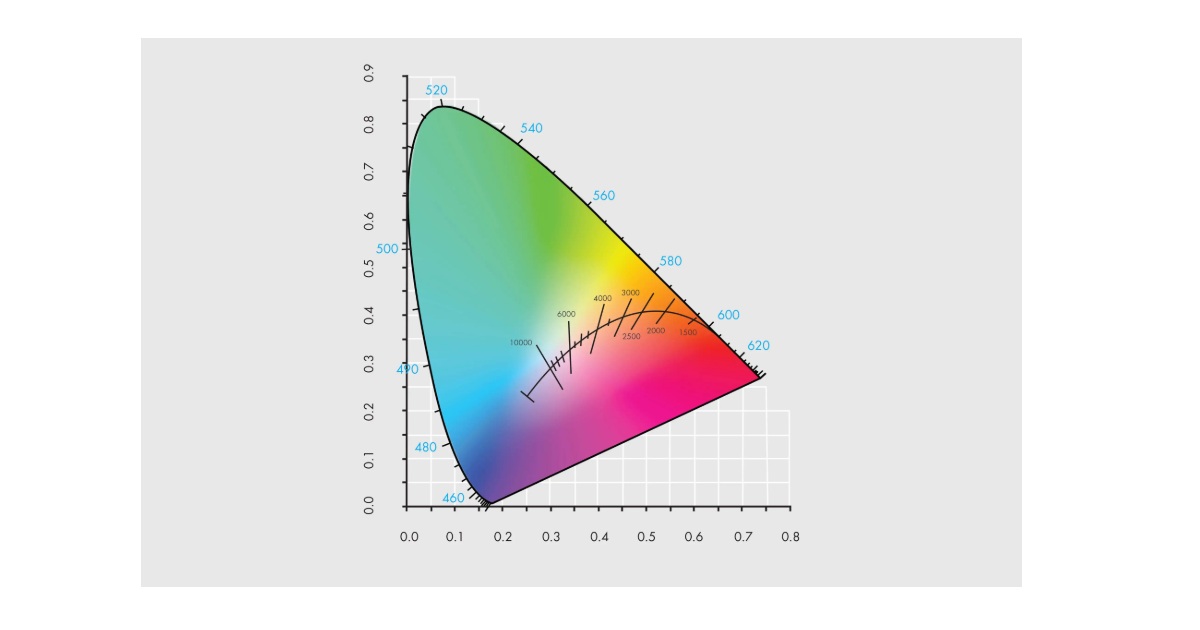
    Lumenpulse: A Look at the Past & Future of LED Binning

    In the lighting industry, the act of “binning” of LEDs is the process of sorting LEDs by certain characteristics, such as colour, voltage, and brightness. The ANSI standard C78.377-2017 provides the dimensions and coordinates of the bins that are currently used to standardize the colour points of all white light LEDs. These dimensions are calculated… Read More…


New Products

  • Salex: Axis Lighting Polyvalence – Light Is Architecture

    Salex: Axis Lighting Polyvalence – Light Is Architecture

    Meet Polyvalence, Axis Lighting’s newest innovation. A versatile architectural lighting system designed to push the boundaries of creativity, performance, and design flexibility. Mix. Match. Combine. Multiple optics, direct and indirect illumination, and endless configurations- all within one cohesive system. Read More…

  • Liteline: New ORBIT MULTI 4″ Retrofit Downlight

    Liteline: New ORBIT MULTI 4″ Retrofit Downlight

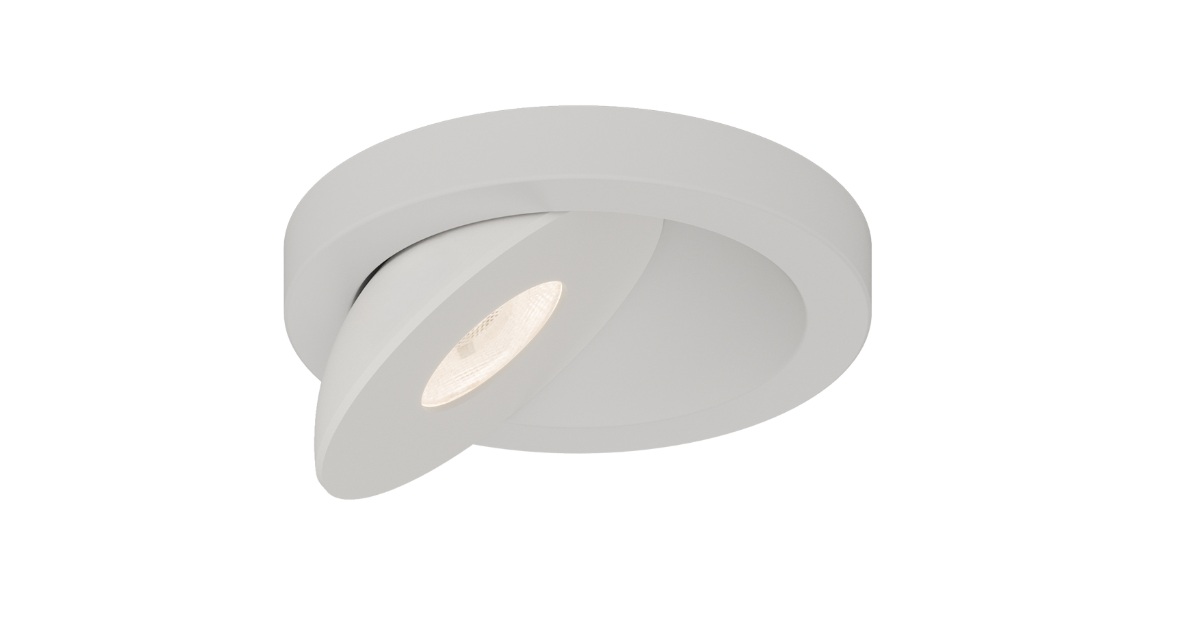
    With full 360° rotation and 50° of tilt, the ORBIT MULTI 4″ retrofit downlight puts light exactly where you want it, even on sloped ceilings. Up to 815 lumens of adjustable output makes it a natural fit for angling onto artwork, highlighting architectural features, or directing task light into a specific corner of a room.… Read More…