Human-Centric Lighting Takes LED Technology to the Next Level
February 28, 2018
The human body reacts to sunlight and darkness by releasing hormones that direct our internal clock, known as our circadian system. Disturbing our internal clock can affect our ability to perform or concentrate and literally puts us at risk for a host of diseases. Recent research indicates that building occupants’ circadian rhythm can be disturbed when they spend long hours indoors without access to the Earth’s natural lighting cycle.
HCL design aims to implement systems using a science-based approach, considering both visual and non-visual effects of light from a physiological and psychological perspective. HCL extends the scope of lighting beyond the traditional architectural design approach, which focuses on aesthetics, visibility and safety, and considers additional lighting attributes in order to improve occupant productivity, health and wellness.
HCL applications are designed to mimic the Earth’s natural lighting cycle. Indoor lights, with more blue components or higher colour temperatures, operate during the day to simulate the daytime circadian cycle outdoors. In contrast, warm temperature low light levels, with higher amber and red components, are used in the evening to simulate the nighttime portion of the circadian cycle. With HCL, lights are adjusted for brightness, colour temperature, and/or colour to improve mood and concentration. This tuning helps stimulate people during the day when they need to be alert and assists in relaxing them during the evening as they prepare for a good night’s sleep.
Based on the human circadian rhythm
The concept of HCL is rooted in the repetitive 24-hour human circadian rhythm. According to The Lighting Research Center (LRC) at Rensselaer Polytechnic Institute, the world’s leading centre for lighting research and education, “Biological rhythms that repeat approximately every 24 hours are called circadian rhythms. Light is the main stimulus that helps the circadian clock, and thus circadian rhythms keep a synchronized rhythm with the 24-hour day. Without this synchronization, research has shown that we may experience long-term decrements in physiological function, neurobehavioral performance and sleep, and are put at a higher risk for cardiovascular disease, diabetes and certain forms of cancer.”
An easily explained and commonly experienced form of circadian disruption is jet lag. We have all felt that constant tiredness after flights that have crossed multiple time zones. That inability to focus and lack of alertness is the result of a disruption in our circadian rhythm.
Lighting control systems match light characteristics with human circadian rhythms
While circadian rhythms are built into the human body, they adjust to the environment via external cues — primarily daylight. Knowing the effect that daylight has on humans, HCL systems use LED technology and intelligent lighting control systems to match light characteristics that map to natural human circadian rhythms. These systems aim to enhance performance and productivity as well as address the psychological and physiological issues that are created by disruptions to our circadian clock.
HCL in practice
HCL is being embraced by various industry segments where building occupants often have access to little or no daylight, such as healthcare, commercial real estate and education.
Healthcare
The healthcare industry is a very attractive environment for HCL. These smart lighting applications have been found to be beneficial to many types of patients in various healthcare settings.
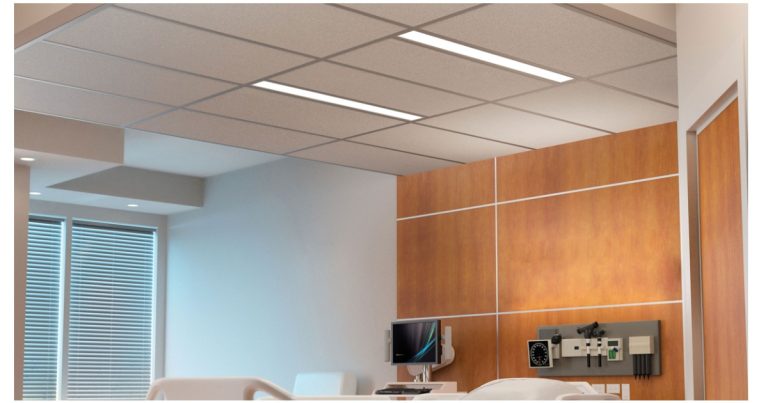
A report from the National Center for Biotechnology Information (NCBI) explains that critically ill patients in the intensive care unit (ICU) suffer disproportionately from sleep deprivation and frequent sleep disturbances. The brain trauma ward at Aarhus University Hospital in Denmark implemented a HCL system to address patients sleep issues in the hope that it would help patients recover faster. As reported in LEDs Magazine, the technology is helping patients rest better and experience less stress, among other benefits.
Another area in healthcare where HCL is helping make progress is with Alzheimer’s and related dementias (ADRD) patients. It is common for patients suffering with ADRD to have their circadian rhythms upended because they are spending most of their time inside and therefore not receiving sufficient natural daylight. This can result in sleep problems, nocturnal wandering, and associated daytime irritability. Studies from the LRC concluded that a light treatment tailored to increase circadian stimulation during the day can be used to increase quality of life in those with ADRD. Further research at LRC shows that, by improving sleep, behaviour, and mood in persons with ADRD, lighting has the potential to delay the transition of those living at home to more-controlled environments.
Commercial real estate
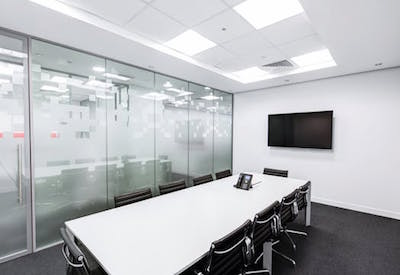
Interrupting or disturbing circadian rhythms can also affect office employees from a performance and productivity perspective. A study by the University of Twente, VU Amsterdam and CBRE Netherlands in 2016 confirmed the relationship between people’s working environment and their health, well-being and ability to perform. For this research, a lighting system with a timer on a circadian-friendly schedule was installed. Warm light in the morning, strong bright light in the afternoon and dimmed light in the evening were programmed. Participants who were working with the lighting settings perceived their work performance as 18% better overall: 71% of them felt more energized, 78% felt happier, and 78% felt healthier. Above all, the outcome of the study showed a 12% increase in task accuracy and 10% improvement in productivity.
Education
HCL systems have also proven to be advantageous in educational settings. High school students are reported to have trouble with alertness earlier in the day. Setting levels of light to match daylight has helped with morning attentiveness in teenagers. For young students, lighting can be tuned to help them settle down for nap times and then adjusted for an increase in awareness during classroom learning periods and testing times.
This article was first published as an Osram blog: http://info.osram.us/blog/led-technology-human-centric-lighting-1. In our next issue: a case study of an LED lighting system tuned to support the circadian rhythms of employees.
Photo source: Pexels