Kevin Willmorth on Controlling TLEDs
December 8, 2017
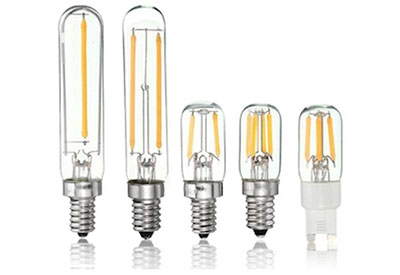
Use of tubular retrofit lamps fitted into existing luminaires is worth considering as an economic next-step for achieving increased energy efficiency and longer in-service life over fluorescent bulbs. Tubular LED (TLED) products can replace T12, T8 and T5 infrastructure products using several strategies.
The simplest approach is TLED lamp-for-lamp fitting (UL Type A), which retains existing ballasts. Removing the driver and fitting new lamps with internal drivers (UL Type B) offer increased efficacy. Replacing the ballast with an external driver (UL Type C) is even more efficient. Finally, retrofit inserts are another option, offering greater consistency and potentially the highest efficiency of all. However, when considering controls integration, there are other considerations to be included that will change which approach is best for a given application.
Typically, fluorescent products are either switched with no dimming, or dimmed using three-wire (a second line-voltage leg) connection or 0-10V dimming controls. The use of standard incandescent style (TRIAC or MOSFET) line-voltage dimming has not been used with tubular fluorescent lamp products. There is also a great deal of difference in ballasting of fluorescent lamps that will impact retrofit choices.
Type A direct replacement TLED products that utilize existing ballasts present a range of issues that will impact dimming performance and capability. As a general rule, if the existing ballast is a T8 instant start type, there are a few TLED products available that will support dimming through the existing ballast (whether 0-10V or 3-wire). How well these perform with any existing dimmer will be unknown until the specific configuration is tested, as there is no guarantee that dimming of the TLED lamp will perform as it did with the fluorescent lamp being replaced. For other ballast types (magnetic, hybrid, or rapid-start), there is no option for dimming TLED products without replacing the ballast or removing it from the circuit (Type B retrofit product). Wireless control of Type A retrofit TLEDs connected to instant-start ballasts is currently limited to a single provider, whose products are paired to a single RF wireless control interface.
Type B TLED applications incorporate the driver inside the lamp tube and eliminate the ballast from the circuit. There are two issues to be addressed in this approach. First, the lamp sockets may need to be replaced with an appropriate non-bypass product that is UL listed for the higher direct line voltage connection (most critical in 277VAC installations). Second, the type of control available with integrated driver lamp replacements is limited primarily to line-voltage or integral wireless dimming. Several retrofit TLED products are available with dimming capability using ELV (reverse phase-cut) dimmers. This is an economic choice for updating simple systems, where switches can be replaced with dimmer controls at the same time the fluorescent lamps are retrofit. However, for large installations that utilize low-voltage control connections, such as 0-10V or DALI, there are no Type B retrofit products available. This has led to the integration of wireless control capability integral with the replacement lamp. The choices include RF control, where a specific RF control is required to control the product(s), to WiFi connectivity that utilize proprietary controls and hubs to control the lamps. Due to the cost of the additional wireless control integration and re-working of the luminaire to remove the ballast from the circuit, Type B retrofit lamps are best used with either simple switches or line-voltage phase-cut dimming. For more sophisticated controls integration, use of external drivers is a superior approach.
Type C retrofit TLED products and retrofit inserts that utilize external drivers present the same variety in controls integration as any fluorescent or new LED luminaire product. This includes virtually all interfaces, including 0-10V, DALI, and industry standard wireless protocols. However, the most commonly available control interface is 0-10V, making these retrofits the most practical solution where existing 0-10V controls are already in place. Installing a 0-10V or DALI wired-control system into spaces that have no such wiring in place is less practical. For this reason, retrofitting controls using wireless control may be the most practical solution. This can be accomplished using Type B or Type C TLED products that incorporate wireless interface features, or 0-10V Type C products with 0-10V control connectivity. By using the more common 0-10V connection to the retrofit product, connected to widely available 0-10V wireless interface adapters, the range of available options of TLED lamps is extended significantly. This opens the door to integration of self-powered light sensor and occupancy controls, eliminating the need for powering conventional wireless controls interfaces, which is well suited to retrofit application.
A final consideration in choosing a retrofit solution is whether maintaining existing luminaires is an economically sound decision. This becomes even more critical when integrating controls into the retrofit scenario. The cost of TLEDs with controls interfaces, plus the cost of labour and disruptions to business for re-configuring existing luminaires, can easily add up to a higher cost than simply replacing a lighting system with the latest, fully integrated luminaire products. Retrofitting older luminaires will not be as efficient or produce the service life of new luminaires, while limiting options for controls connectivity. Because of this, before embarking on any retrofit project, it is worth the time to investigate alternatives to achieving the desired goals. This is made even more critical when adding controls into any space that does not have a legacy system already in place. Retrofit TLED products and addition of controls are certainly worth considering as an economic alternative to full system replacement.
This article was previously published by the Lighting Controls Association: http://lightingcontrolsassociation.org/2017/11/15/kevin-willmorth-on-controlling-tleds/
Kevin Willmorth has been involved with lighting since 1981. His experience includes electrical system design, lighting design consulting, product design, marketing, business strategy, and editorial writing. His past positions include positions include owner of a lighting design consultancy, VP of Design and Marketing for Kim, Winona, and Visa Lighting, VP and Director of Product Management Renaissance Lighting, and VP of Design – Lighting for Atlandia Design. He currently owns Lumenique, LLC, offering product design, prototype development, testing, and strategic consulting to manufacturers, application design and technology evaluation for building owners, and Tasca, a small industrial task lighting manufacturing firm. He is also Editor for SSL content in all Construction business media publications including Architectural SSL, Architectural Products, NZB, and Illuminate; kwillmorth@lumenique.com; www.lumenique.com