A Business Case for Future-proofing Building Lighting Systems, Part 2

April 17, 2018
This business case lays out a rationale for future-proofing buildings and provides tools that will enable building owners to think more strategically about how they are looking at their building management systems and make initial investments upfront for long-term benefit. Previously published in Part 1: four arguments to make in your business case, starting with why do it now. Here in Part 2: common misconceptions about future-proofing and what to consider before you start the process.
Common misconceptions about future-proofing
Misconceptions about what future-proofing is lead people to approach it incorrectly and make mistakes. Here are three misconceptions your business case needs to overcome.
- Confusing future-proofing with Internet of Things (IoT) deployment. Often, discussions of evolving building system functionality lead directly to a focus on IoT strategy and implementation. Having a sound IoT strategy is essential to enabling new applications and value-streams, but it is equally important to address the more essential future-state functionality needs. The smartest future-proofing strategy satisfies both future-readiness and IoT readiness, following these four critical steps:
- determine the baseline, table stakes system functions that are required
- define the probable future-states and new functionality that will be required to address them
- identify the opportunities to drive new value through IoT applications that leverage the data from your building (e.g., occupancy status transforms into space utilization metrics, indoor positioning into customer loyalty applications)
- develop a strategy that allows for simple, cost effective expansion out of traditional energy management to a broader ability to manage the space, and to IoT readiness
- Waiting for certainty is safe. It is human nature to sit on the sidelines and watch what happens before taking action. This way of looking at future-proofing is flawed. If a digital retrofit project is already planned, then the best opportunity to future-proof is now.
- Piecemeal buying saves money. Another perceived “safe” approach is to buy only the equipment required to perform a specific retrofit and opt to “pay as you go,” instead of taking a broader strategic approach to meeting present and future needs. For example, if a project that specifies digital lighting and controls for a warehouse, but does not include similar systems for the office spaces, then the opportunity to leverage the energy savings to fund a complete project is foregone and the costs for future upgrades is simply “kicked down the road.”
Proper future-proofing should establish the technology infrastructure and distributed intelligence to enable IoT development on the existing system, rather than creating a parallel system, which can lead to inefficiency and redundancy.
Future-proofing the right way
Once a building owner embraces the economic benefit of investing in a future-proof lighting system, the next step is to understand the right way to do it. It’s critical to gather the right information and know the right questions to ask to frame conversations with your architectural designers, specifiers and contractors. A good place to start is to think about the future needs, opportunities and requirements for the building:
- What are the big changes that are going to happen? How is the industry and more importantly the tenant business evolving?
- What additional value can this investment unlock for my “customers”? The same data leveraged for energy savings applications can be turned into valuable applications that optimize both building management and occupant/customer experience. It requires thinking beyond energy savings to how can data make you more competitive?
- What is the current and expected competitive landscape? What are peers and competitors in the space doing? How do you make sure the building is going to be competitive with other offerings?
- Consider current and future safety and security needs. How do you ensure occupant safety in a dynamic, mobile workforce environment?
- What regulatory or other compliance requirements will exist? Will there be new incentives for sustainability and green initiatives?
Shifting the focus to the lighting itself, it’s smart to calculate the total cost of ownership, especially given the longevity of most LED lighting. It is also essential to look at lighting solutions as platforms, as opposed to products. Doing this ensures that you will choose a system that is easily upgradable, can support many intelligent functions, and won’t become obsolete in a few years.
Lastly, be sure to frame the expected benefit and ROI in terms of tenant and other shareholder value, so the enhancement can be promoted. Talk to tenants about what you are trying to achieve with the design and how the investment will help them achieve their goals. With the right infrastructure in place, the facility can be differentiated and hence more attractive to tenants than other buildings.
Future-proofing is re-imagining the building space
Lighting systems are getting smarter and moving closer to supporting not only operational key performance indicators, but overall institutional goals. Adopting and nurturing a future-proof mindset about lighting requires thinking more broadly, holistically and strategically. The mindset shift must be toward configurability and upgradability. A solid approach is to evaluate retrofit investments on two levels: what the new system can do today and what might it do tomorrow.
Energy savings is a clear near-term benefit, but today’s smart lighting systems can provide substantially more value.
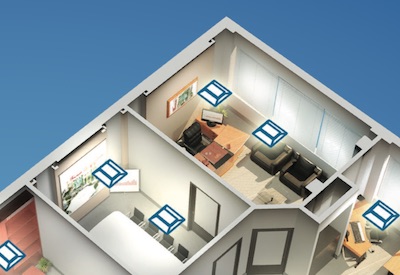
Spaces can be transformed into a powerful, connected infrastructure that can become a business builder. Data gathered throughout the building can be used to create business applications that deliver value-added services to tenants and increased return on investment for a smart building.
Even if you are not ready to employ enhanced functionality, making a strategic investment in a future-proof system can pay dividends down the road. A good way to think about future-proofing a building space by likening it to a computer or smartphone with upgradable applications over time — the space can evolve as needs and opportunities evolve. Future-proofing can also help building owners respond to and endure unforeseen risks factors, such as an economic downturn or a natural or physical disaster.
This article was first published online by Acuity Brands. Read Part 1 here: http://www.lightingdesignandspecification.ca/best-practices/2236-a-business-case-for-future-proofing-building-lighting-systems-part-1. Read the full article: https://cdn2.hubspot.net/hubfs/2327376/AC_6941_Smart Building Whitepaper Gated Content Campaign_0917/Whitepaper_FutureProofing.pdf