5 Reasons to Rethink Workspaces and Lighting

February 11, 2019
Work is now “what we do,” not “a place where we go.” This is how authors of a Deloitte report, “Advanced Workspace Strategies: Enabling Today’s Mobile Workforce” described modern work environments and they couldn’t have said it better.* Work-life balance is gradually being phased out by work-life harmony as technology enables employees to assert more autonomy over their schedules. Unsurprisingly, more and more workers are choosing to scrap commutes and braid work tasks seamlessly into their lives.
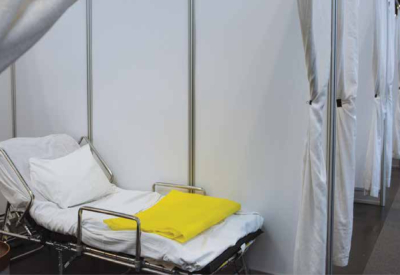
Vacant cubicles
Today’s agile and mobile workforce uses office space differently than the prior generation, yet companies continue to dole out money for cubicles and workstations that aren’t used at the same frequency as they were in the past.
With the number of empty office seats on the rise, the need for effective capacity planning of corporate real estate (CRE) is more pressing than ever. For organizations to remain competitive, they must control costs and boost business outcomes, but to accomplish this in a sustainable way they must continually rethink the amount of physical space required to accommodate ongoing changes. Whether companies need to adjust the way they manage private offices, open-plan seating, conference rooms or other amenities, the amount of space of all types is under increasing scrutiny.
Consider these five game changers that are pushing CRE functions to rethink their approach to capacity planning:
- Gig economy. According to a study “Freelancing in America: 2018,” more than one in three (35%) Americans freelanced in 2018 and the freelance workforce grew from 53 million to 56.7 million, or 7%, in five years. Meanwhile, the non-freelance U.S. workforce grew just 2% (from 103 million to 105.3 million) in five years. In addition, the study found that people are increasingly starting to freelance by choice versus necessity. This gig economy, where temporary and flexible jobs are commonplace, undermines the traditional economy of full-time employees who rarely change companies and focus on one career. Enterprises are already demanding freelancer engagement that’s automated, centralized and intelligent. Worker procurement, vetting, compliance, drug testing, payments and the gamut of local legal requirements will be increasingly expected to be managed on a user-friendly, comprehensive platform.
- Millennials. Today, the millennial generation represents more than 35% of the U.S. labour force and it is estimated that by 2025 they will make up more than 75%. This group is at the forefront of flexible work arrangements: Millennials don’t believe that productivity should be measured by the hours worked in the office, but rather by the output of the performed work, according to a PwC employee study.
- Web conferencing. From 2016 to 2024, the web conferencing market is projected to grow at an approximate CAGR of 10%, according to Grand View Research. Cost savings and productivity enhancements due to reduced travel time and fewer physical meetings requiring real estate infrastructure will continue to drive adoption. Rapid technology improvements and ongoing workplace changes are other factors underpinning this growth.
- Flexible work arrangements. Companies are waking up to the fact that the traditional 9-5 format isn’t necessarily the most efficient. In fact, many companies on the Fortune 100 Best Companies to Work For 2018 list offer flexibility to their workers. Many more are following suit, letting employees choose alternative arrangements such as different daily schedules, fully remote or partially remote telecommuting, and job-sharing setups.
- Office lease disruptions. There is strong evidence to suggest that traditional office lease terms are under threat, according to data from the Magenta Report. Since work and commerce are no longer contingent on a physical base of operations, companies’ dependence on bricks and mortar is diminishing as well. Businesses are reconstituting the policies that govern their employees’ working hours and locations, which is incompatible with most traditional workspaces.
Capacity planning that wins
When companies strategically plan for changes in capacity using robust, detailed metrics on key performance indicators (KPIs) such as employee space utilization, attendance, mobility and meeting space use, they can achieve better space efficiency. At the same time, they would be able to provide workplaces that accommodate future growth and improve employee engagement. Capacity planning, including consolidation and “growth without growth,” results in lowered costs and better adjustment to changing work styles.
Successful consolidation requires a fine balance between delivering necessary efficiencies while maintaining a workplace that attracts employees and is equipped for future expansion.
A good “growth without growth” strategy will help companies avoid unnecessary growth by comfortably increasing headcount within their existing footprint. It will also help ensure adequate room for future expansion and enable organizations to capture significant savings in capital and operational expenditures.Changing workstyles, M&A activity, lease expirations and corporate divestures are creating opportunities for companies to rethink, reconfigure and rightsize their real estate.
Capacity planning that factors in the changes listed above is only one of the services offered by Osram and Rifiniti, who have joined forces to provide smart building IoT solutions for commercial real estate.
How it works
Lighting enables commercial office space to become “smart” — creating the right level of light where and when needed. Lighting is an ideal IoT platform because it is ubiquitous throughout the workspace.
Osram sensors, such as the new SensiLUM wireless sensor embedded in luminaires, serve as ideal data nodes on a smart lighting network such as the Encelium Extend Networked Light Management System (LMS). Lighting and environmental data collected from these nodes are stored on Osram’s new cloud platform, Lightelligence.
The stored data can be accessed via an API by third-party analytics software developers such as Rifiniti, offering SaaS for smart building applications beyond lighting. This solution removes the guesswork out of space utilization — commercial real estate professionals are now able to see exactly how each space is used.
Rifiniti Optimo workplace analytics software solutions include capacity planning and conference room rationalization that enable businesses to optimize commercial office space and boost efficiency while providing employees with flexible, modern workplaces.
To learn more about IoT-enabled workspace analytics, download the brochure below.
This article was first published by Osram online.
* Read the Deloitte report here.