September 19: IES Technical Seminar in Toronto and Southwestern Ontario
September 10, 2018
“Non Visual Effects: Status of Knowledge and a Path to a Recommended Practise” is the title of a technical seminar organized by IES Toronto and taking place on September 19 at noon in Toronto and 6:00 pm in Cambridge, Ontario.
The 24-hour light-dark pattern is the main synchronizer of our circadian rhythms to the local position on Earth. Lack of synchrony between sunrise and sunset and our biological clock has been linked to many serious maladies. However, lighting for the circadian system employs lighting design objectives that differ from those typically used in traditional architectural lighting design, and therefore, requires concepts and metrics that differ from those currently used by lighting designers, manufacturers and government regulators.
The goal of this seminar is to provide attendees with the latest research as it can be applied, and the knowledge necessary to improve our modern living environments with healthy lighting.
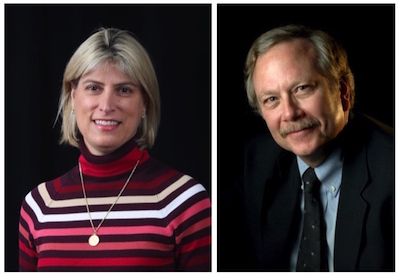
In the first presentation, Mariana G. Figueiro will provide an update of the science and the applications of practical design solutions to increase the potential for circadian light exposure in buildings and new field data investigating the health effects of light will be discussed. Figueiro is Director of the Lighting Research Center and Professor of Architecture at Rensselaer Polytechnic Institute. She conducts research on the effect of light on human health, circadian photobiology, and lighting for older adult, and has authored more than 70 scientific articles in her field of research.
In the second presentation, Mark S. Rea will review work by Underwriters Laboratory (UL) to develop a recommended practice for daytime environments will be offered. Rea is Professor of Architecture and Cognitive Sciences at Rensselaer Polytechnic Institute. He served as a Senior Research Officer at the National Research Council Canada before becoming Director of the LRC from its establishment in 1988 until 2017. Rea is well known for his research in circadian photobiology, mesopic vision, psychological responses to light, lighting engineering, and visual performance. He is the author of more than 350 scientific and technical articles, and was the editor-in-chief of the 8th and 9th editions of the Illuminating Engineering Society of North America (IESNA) Lighting Handbook.
Register here for