Avoiding and Resolving Issues with Products That Don’t Dim as Expected
September 7, 2018
With the right combination of dimmer and solid-state driver for LED products, dimming performance can achieve excellent results from 100% all the way to dark, smoothly and predictably.
However, when the combination is wrong, many undesirable effects may occur. Flickering, flashing, and stumbling as the dimmer is moved are a few of the most annoying issues. Truncated dimming, where dimming runs to a point, then simply stops or cuts off completely, is another issue that might result. Other issues might include manual dimmer control movement, where only a portion of the controller’s action has any effect on dim function, often so touchy that setting any specific dim level consistently is impossible.
Investigating the reasons for these poor performance issues is a necessary evil that requires basic understanding of where issues can arise.
A critical step in resolving dimming issues is with initial product selection. While there are dimmable drivers capable of dimming to dark, this feature is not common. One can expect dimmable drivers to achieve either 0%, 0.5%, 1%, 5%, 10%, or 20% at the lowest setting.
Keep in mind that these values are based on percentage of power to the light source, not perceived dimming levels. Perceived illuminance differs from power level significantly. Dimming power will closely match measured results using a light meter, but will be out of alignment with perceived illuminance. To estimate this effect, find the square root of the dim power level (in %) to realize the perceived illuminance level (in %). For example, the light from a luminaire dimmed to 5% dim power will appear to only be dimmed to 22% of full brightness. To realize a perceived dimmed level of 5% requires a dimmer/driver combination that is capable of reaching below 0.03%.
The message here is that setting and understanding realistic expectations is the first step in avoiding field issues that may not be a product failure at all. Expecting a 10% dimmable driver to dim the light to 10% of full brightness, will produce undesirable results, as the perceived brightness level will be closer to 32%. Select dimmers and luminaires based on perceived dimming performance over simpler power level dimming alone.
Dimming range and response issues can also be caused by a mismatch between the dimming curves built into driver software and dimming controllers. When they work together, the dimmer control will produce a predictable result in luminaire light response. When they are not compatible, or are not aligned, dimming response may not be consistent with control setting over the entire range from full bright to fully dimmed. Unfortunately, the information required to resolve this issue is not published by either dimmer manufacturers or driver producers. The only approach to avoid this possibility is to test the dimmer and driver combination with an example load and observe their combined behaviour.
In application, should luminaires, either singularly or in groups, exhibit strange behaviours, such as flashing, pulsing, flickering, or fluttering when dimmed, there are several potential causes worth investigating.
At the top of the list is to ensure that the dimmer is properly connected and matches the driver being controlled. Using 0-10V controls on 1-10V drivers can cause issues at low dim settings, specifically when on-off functionality is included. 1-10V luminaires on 0-10V dimmers may flash when turned on/off or will fail to turn off completely without cutting incoming power.
There are also two types of 0-10V dimming: voltage sourcing and current sinking. For entertainment control applications, it is possible that the control will use voltage sourcing, where the dimming system provides the low voltage control signal to the driver. For all architectural controls, current sinking is used, where the luminaires provide the low voltage signal for the control to act upon. Mixing these two up will result in no dimming response at all. Insure that the driver and dimmer are in compliance with IEC60929, which specifies both the voltage and current characteristics of architectural dimming controls.
Connecting line voltage dimmers demands that the type of dimmer match the driver employed. Triac dimmable products will generally function with Triac (leading edge) or ELV (trailing edge) dimmers, while trailing edge products will exhibit flickering and sudden dimmer responses when connected to Triac dimmers. For the most part, use of LV (designed for magnetic transformer loads) is not recommended, as the dimmer function can be unpredictable. Line voltage dimmers are available from so many providers, with a wide range of specification, causing a range of issues that cannot be described fully here.
As a proactive measure, selecting products that are designed within IEC TR 63036:2016(E) which describes standardized forms of phase cut dimming. The only sure method for assuring compatibility is to test the dimmer with the intended load to expose any undesirable reaction. Driver and luminaire manufacturers may also provide lists of pre-tested dimmers found compatible. For diagnosing field problems, having a known functioning dimmer on hand to install and compare to a product causing field issues can go a long way toward solving an issue quickly.
Wiring problems are generally diagnosed by disconnecting the dimmer controls and verifying luminaire function at full power. If this resolves undesirable dimming effects, the next step is to test different dimmers on the circuit in order to eliminate dimmer control incompatibility issues. If the problem persists, it will be necessary to remove a sample luminaire and attempt to isolate the driver itself as a cause separate of the dimmer, or compatibility issues with the dimmer. This requires the participation of the manufacturer, to avoid any possible miss-wiring of luminaires that might void warranties or cause failures the manufacturer will not accept as their responsibility.
Luminaire design issues can also become evident when dimmed. Generally, when an LED luminaire flashes, either at start up or at some point when dimmed, the issue can be traced to a low forward voltage condition, where the LED being powered is not producing enough voltage drop for the driver to function properly. Many drivers will flash, or strobe at low frequencies, indicating this condition. Others may simply stop operating at some point when dimmed. This can only be resolved by the luminaire manufacturer, in order to ascertain whether a component within the system is the cause, or some other issue has arisen in manufacturing that was not discovered. It is worth noting that dimming malfunctions due to internal circuit voltage problems are more common with 277V systems than at 120V. Further, during construction, temporary power is often outside the standard voltage specification, which can cause dimming issues that disappear once more reliable permanent power is connected.
Flickering at either 120Hz or 60Hz is another common dimming complaint. This is most frequently present in low quality line voltage, phase cut dimming controls connected to low cost driver components. This is not a field condition, it is a product issue that should be addressed during product selection phase.
Fluttering of light levels when a dimmer is moved through its range is often caused by low cost dimmers that have too few steps. Most electronic dimmers utilize some form of digital circuiting that steps light output down from full to minimum dim setting. To avoid this, quality dimmers utilize a large number of sampling steps, that are imperceptible to the operator. Low cost products may use fewer samples, creating a sense of flickering steps as the dimmer is actuated. This can exist in manual dimmers as well as electronic control systems.
Avoiding field issues is the first and best strategy when applying dimming of luminaires. A little effort put into testing samples, verifying compliance with standards, or verifying compatibility with manufacturers is an essential first wall of defence. With this in hand, field problems can then be assumed to be extraneous to the product interaction, leaving field wiring as the first issue to double check. After that, any issues can be boiled down to products not performing to manufacturer standards, which is then used to recruit them into solving field issues experienced. When expectations are realistic, products qualified through specification and/or testing, and installed verified to be complete and correct, there should be no field issues to resolve.
This article was first published online by the Lighting Controls Association: lightingcontrolsassociation.org/2018/07/06/avoiding-and-resolving-issues-with-products-that-dont-dim-as-expected/
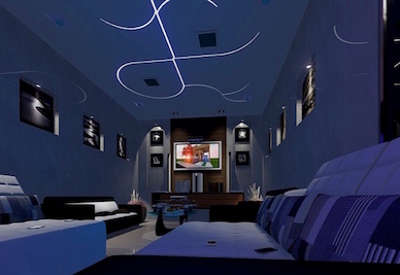
Photo courtesy of Eduardo Silva Barbosa on Pixabay
Kevin Willmorth has been involved with lighting since 1981. His experience includes electrical system design, lighting design consulting, product design, marketing, business strategy, and editorial writing. His past positions include positions include owner of a lighting design consultancy, VP of Design and Marketing for Kim, Winona, and Visa Lighting, VP and Director of Product Management Renaissance Lighting, and VP of Design – Lighting for Atlandia Design. He currently owns Lumenique, LLC, offering product design, prototype development, testing, and strategic consulting to manufacturers, application design and technology evaluation for building owners, and Tasca, a small industrial task lighting manufacturing firm. He is also Editor for SSL content in all Construction business media publications including Architectural SSL, Architectural Products, NZB, and Illuminate; kwillmorth@lumenique.com; www.lumenique.com