Bringing Digital Lighting Management to the Fixture Level
JP Bedell
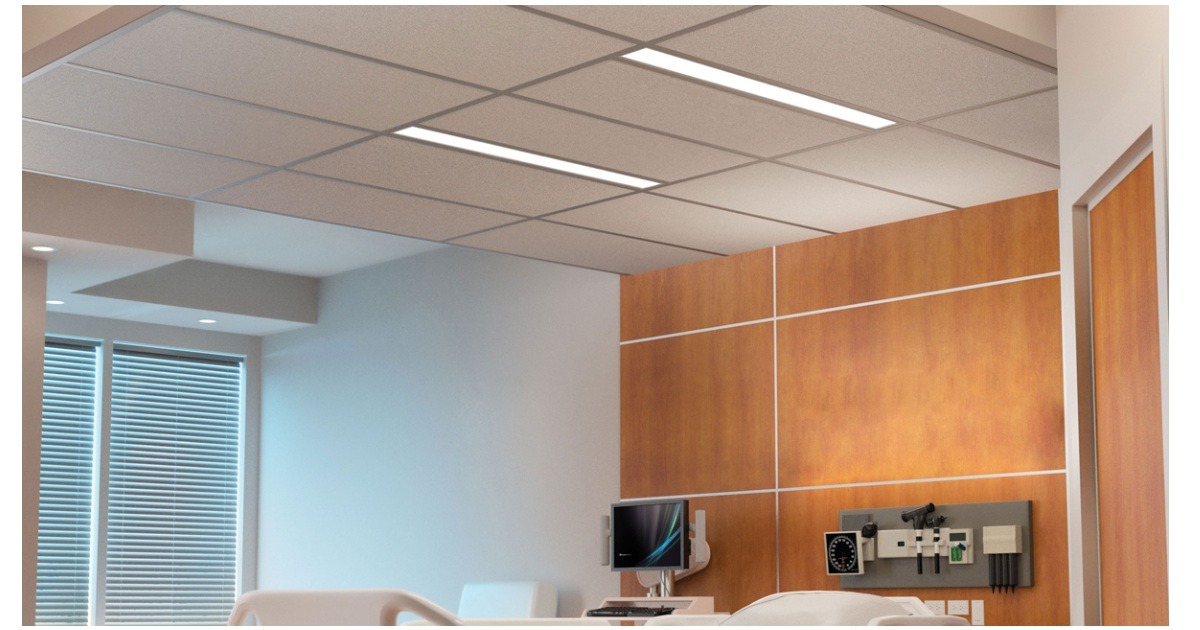
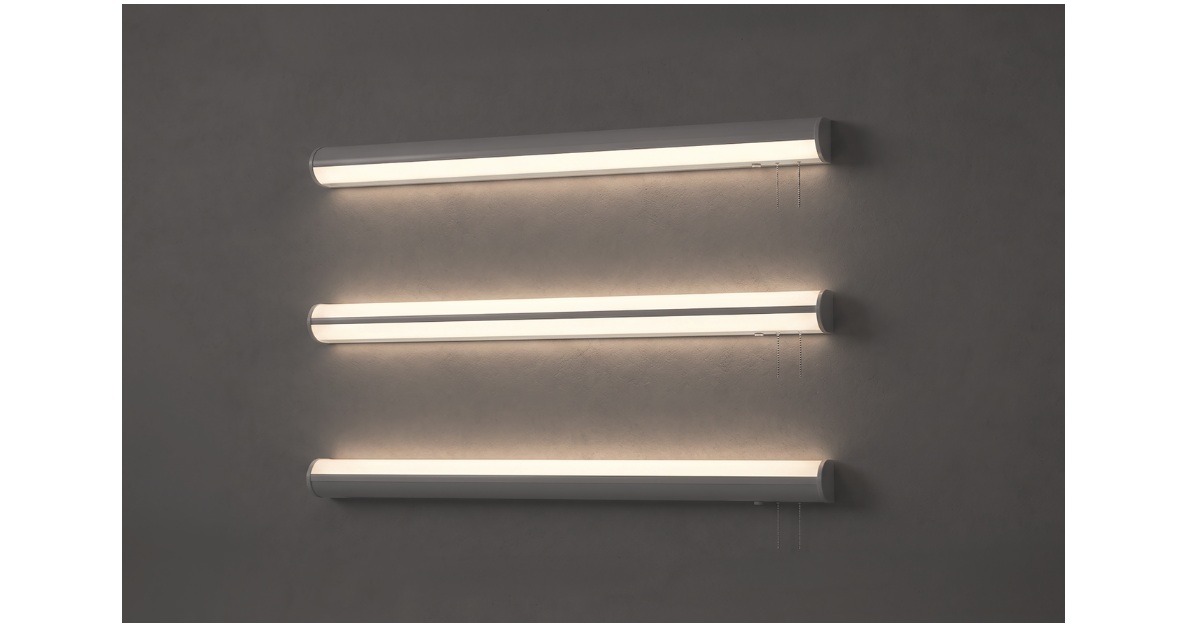
Over the last year we’ve seen a move to bring lighting control to the fixture level. Many manufacturers have integrated occupancy sensors and photocells into their fixtures. Sometimes these controls are connected to a local network of lighting fixtures, but more often the integrated controls are designed to generate some energy savings by enabling bi-level switching for areas like corridors, stairwells and sometimes troffers in open offices. These systems have a few glaring problems. The most obvious of which is that with no software front end, there is no data capture for measurement and verification of savings. Another limitation is that without the ability to network these fixtures to a larger building management system, lighting fixture settings must be changed at each fixture manually. This is a time and labour consuming process. That’s why Wattstopper developed their all-new fixture level lighting controls.
So how does it work?
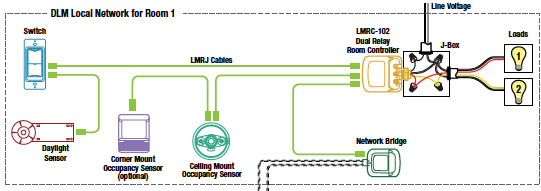
If you’re not familiar with DLM, the simple diagram above tells you more or less everything you need to know. The Digital Lighting Management system is the simplest way to build scalable networked lighting controls. It starts with connecting the room controller to the junction box (in this case a 2 load dimming controller). Your five wire dimming connections are then run from the room controller (0-10v) back to the fixtures. On the other side of the system, all occupancy sensors, daylight sensors and switches are then connected over CAT5 cables and can daisy chain in any order back to the room controller. Once the system sees power, the room controller will automatically configure the room to meet energy code. Changes can easily be made via the configuration tool.
Of course this is a single room. If you want to connect multiple rooms and create a network. It’s as simple as…
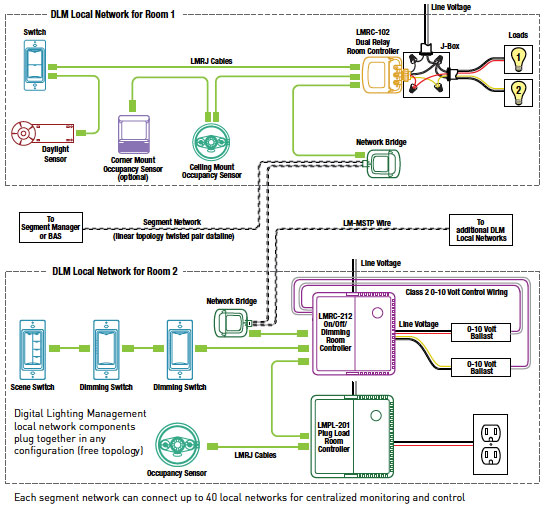
By adding a network bridge and segment manager, you’ve created a lighting control network that can then be tied into BACnet-enabled building management systems.
Okay, great. So how do the fixture level controls work?
Wattstopper has created a device called LMFC-011. This is a simple relay with 0-10v dimming control built in. It is meant to be a specified addition to the luminaire from the factory. When added to the network they simply become another device on the network with their own individual behaviours as dictated by the commissioning.
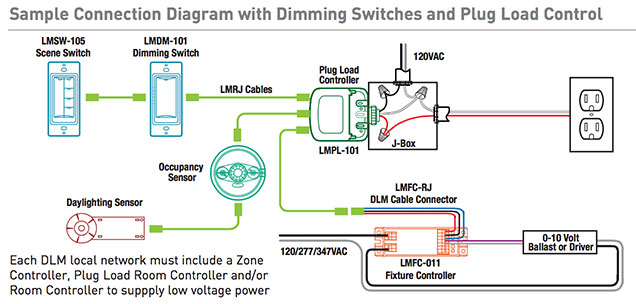
I think I get it. Now, where would I use fixture level controls?
There are several ways in which this style of connection is going to be more effective than traditional zonal control. First off, by putting this device in every fixture you make the controls connections speedy, foolproof CAT5 connections. Here are some scenarios where fixture level control makes sense:
– data centres
– certain types of open plan offices
– hallways/corridors
– stairwells
– trading desk areas
– any space where partitions or room arrangements might change with new tenants.
Okay, but do you have a hypothetical scenario that perfectly illustrates why I would want this system?
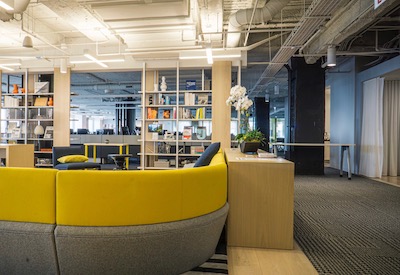
Funny enough, I do! So imagine you manage one of those increasingly popular co-working spaces here in Manhattan. Without networked lighting controls you are more or less stuck with the arrangement of the lighting. If you want to rearrange and add meeting areas or semi-private partitions there is no easy way to re-configure the lights to be controlled based on that need. You’re stuck with the groups and arrangements you have.
Now imagine you had control over each individual lighting fixture. Partitions could move around, new rooms could be created and with a few clicks of the mouse, and new control zones could be created that correspond to the new floor plan. This is the flexibility and energy management that offices of the future will require to be effective in the 21st century.
Find out more: www.wattstopper.com/solutions/fixture-integrated.aspx.
JP Bedell is a Lighting Guy from New York City. Sales rep and blogger for SDA Lighting. Stan Deutsch Associates, founded in 1962, is dedicated to offering specification-grade lighting products to the local design community. SDA offers quality lighting solutions to commercial, retail, hospitality, institutional, healthcare and educational markets; http://www.sdalighting.com.