Comparing LED and HID Horticultural Luminaires
June 11, 2018
An evaluation of the energy and economic performance of LED horticultural luminaires compared with high-pressure sodium (HPS) and metal halide (MH) horticultural luminaires has found that the LEDs cannot replace HPS luminaires on a one-for-one basis while still maintaining the original photosynthetic photon flux density (PPFD).
The evaluation was conducted by the Lighting Research Center (LRC) at Rensselaer Polytechnic Institute, and funded in part by Natural Resources Canada. Based on findings from a literature review and online survey conducted by the LRC in 2016, the project team developed a framework for evaluating and comparing horticultural luminaires. The framework includes recommended testing, evaluation, and reporting methods. It allows luminaires to be compared based on equal PPFD. PPFD for plants is analogous to photopic illuminance on a work surface in an architectural application. The framework includes an analysis of 11 luminaire-specific metrics and 5 application-specific metrics, which provide growers with the best available information regarding any given horticultural luminaire’s performance.
The LRC then used this framework to test and evaluate 13 horticultural luminaires, including 10 LED, 2o HPS, and one MH product.* First, the LRC photometrically tested individual luminaires. Then the LRC modelled the use of the luminaires in a simulated greenhouse to assess the number of luminaires and the lighting system energy requirements necessary to reach minimum PPFD and uniformity criteria.
The results show that intensity distribution plays an important role, illustrated by the fact that two of the tested LED luminaires had higher luminaire efficacy than the HPS luminaires but still had a higher total power demand in the greenhouse application.
The LRC found an increase in shading from LED luminaires compared with HPS luminaires due to the size of the luminaires and the fact that more are needed to provide the same PPFD in a greenhouse. The shading from LED luminaires reduces daylight in a greenhouse by 13% to 55% compared with a 5% reduction in daylight from HPS luminaires, thus more electric energy could be needed for lighting with the LED systems, depending upon the available daylight.
The greater number of LED luminaires and their equivalency, on average, in application power demand impacted their life-cycle costs. The LRC found that three of the tested LED horticultural luminaire lighting systems had lower life-cycle costs and the remaining seven had higher life-cycle costs than either of the two 1000-watt HPS lighting systems that were tested.
The results of the evaluation show that stakeholders can be misled by considering luminaire efficacy alone. Rather, the luminaire intensity distribution and layout to reach a criterion PPFD are necessary for an accurate life cycle cost analysis. The LRC report provides a technology-neutral framework that stakeholders can use to evaluate lighting systems.
The project was funded by the Lighting Energy Alliance and Natural Resources Canada. Members of the Lighting Energy Alliance include Efficiency Vermont, Energize Connecticut, National Grid, and the Northwest Energy Efficiency Alliance.
View the report
This article is a lightly edited version of the report’s introduction.
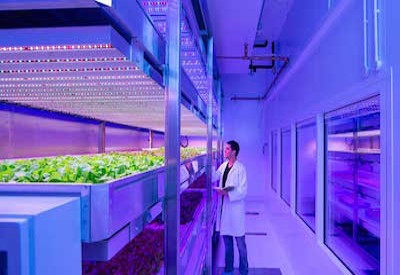
Photo source: Philips Lighting
* The results in this report are based on electrical and photometric testing of one luminaire sample per model. Life testing was not conducted for this project. No crops were grown or evaluated with any of the tested luminaires.