Acuity’s Steve Roe Talks Value of Embedded Controls
September, 10, 2023

Commercial lighting specifiers have a tough job. The task of delivering light that satisfies users has become ever more demanding, particularly as energy codes increasingly require controls to maximize energy savings.
In substantial ways, this hard work is to the benefit of buildings and their owners and users. By ensuring light is used only where, when, and in what quantity is needed, users gain flexibility while owners enjoy lower ongoing operating costs.
But yes, getting there can be a challenge. Today, a fresh lighting design is really a lighting and controls design.
Fortunately, leading manufacturers created a tool for lighting specifiers to do it all based on a simple formula: put the controls within the luminaire (light fixture).
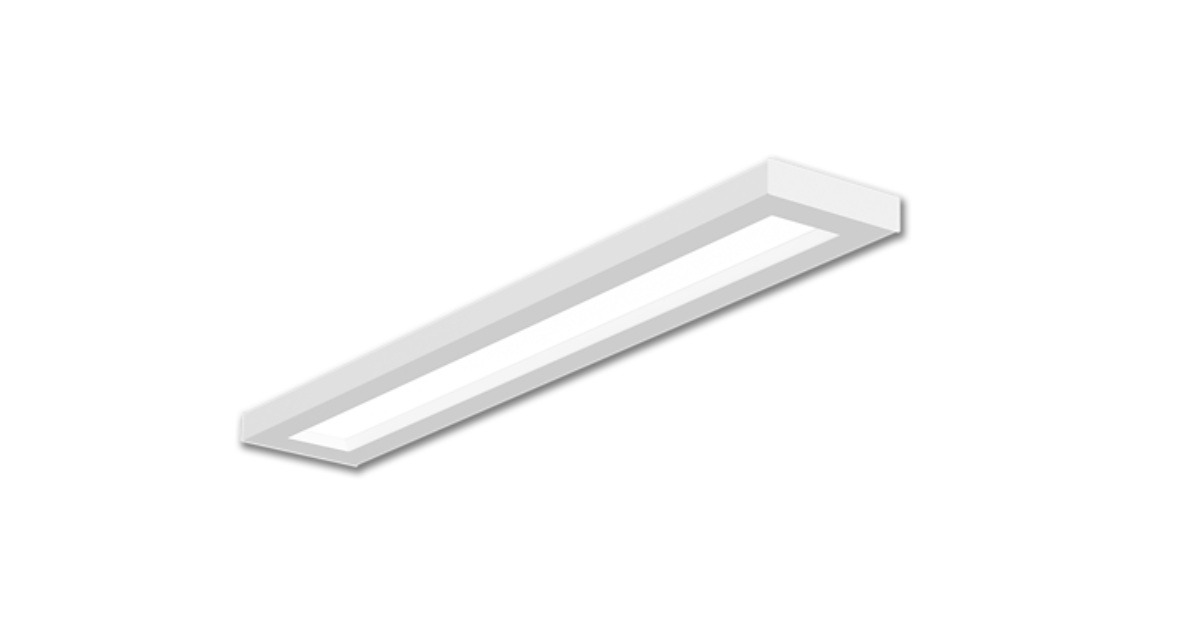
Embedded control consists of luminaires with pre-installed occupancy and daylight sensors, controller, and optional networking capabilities.
By combining traditionally remotely installed controls into the luminaire, each luminaire becomes its own control point, typically paired with local manual controls for user override capability. These luminaires in turn are then often networked wirelessly or via digital low-voltage control wiring, which enables remote, software-based configurability, and the potential to collect useful data.
What are the advantages of this approach?
Aid in achieving code compliance. By providing automatic shutoff and daylight response, embedded controls offer a tool for achieving energy code compliance. The 2018 and 2021 versions of the model International Energy Conservation Code (IECC) recognize embedded controls as a simplified compliance path. IECC and the 2022 version of the California Title 24, Part 6 energy code limit control zoning in open offices to 600 sq.ft., which is well suited to an embedded controls approach.
It qualifies for many rebates. In existing buildings, upgrading to a new energy-saving lighting system can incorporate controls to maximize energy savings. To minimize the initial cost and increase ROI, many utilities offer rebates that encourage installation of luminaires with pre-installed sensors or luminaires with pre-installed sensors that are network capable.
It’s flexible. Because each luminaire doubles as a control point, the lighting control system becomes inherently flexible, able to respond to individual users. Dimmable luminaires increase flexibility by allowing a range of light output.
It’s energy saving. The individual responsiveness of the system typically translates to higher energy savings. According to a 2020 study by the DesignLights Consortium® (DLC®) and the Northwest Energy Efficiency Alliance, average lighting energy savings exceed 60%.
It’s simple. For lighting specifiers, the design is simplified. There is no need to determine switchleg wiring/zones in advance. Product schedules can be streamlined. For the contractor, installation becomes simplified, with no need to install remote control devices where embedded controls are used; resulting labor cost savings can offset the luminaire premium. As the controls are pre-installed, interoperability between the lighting and control devices and within the control system itself is relatively assured. If there is a problem, it is solved with a single vendor providing both the lighting and controls.
It provides a path to the benefits of networking. Luminaires with embedded controls can be joined in a wireless or wired network limited to a room or spanning an entire building or even a campus. Depending on the system, this enables features such as remote configurability of control zones and sequences of operation without rewiring, ability to adapt the lighting to future space changes, and generation of data that can be used for measuring, monitoring, and other useful applications such as optimizing space utilization.
Great applications for embedded controls include open offices, warehouses, parking garages, and outdoor general lighting—anywhere you want to comply with energy codes and maximize energy savings and flexibility.
As a leading manufacturer of both lighting and controls, we’re a big believer in the embedded concept at Acuity Brands. We’ve added a range of options to our product mix to provide it as an option for you to match to projects where it’s a right fit. From troffers, panels, architectural luminaires, and area lighting and more, we offer luminaires with embedded control options to satisfy virtually any application. From standalone controls to DLC NLC5-qualified room-based control solutions and programmable and data-generating building and campus networks, Acuity Brands offers the right control solution—following our belief in providing a consistent value and user experience across all buildings and spaces.
Meet Steve Roe
Steve Roe is the Vice President of Controls at Acuity Brands. He has held various roles at Acuity and is experienced in product design and development, project layout design, installation, programming, and service/support of lighting control devices and networks. Steve’s passion is lighting controls and he loves to demystify the complexity of these devices and networks. Outside of his work, Steve spends his time with his wife and 2 children, and enjoys home projects, and traveling.
Published with the permission of Lighting Controls Association